

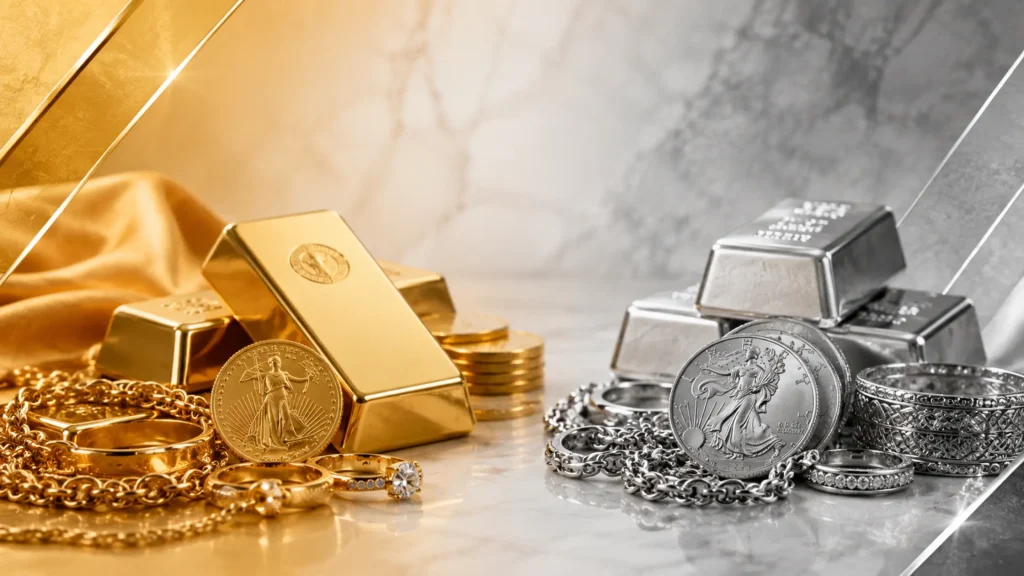
Gold and silver are both precious metals. Both hold real value. Both can be sold for cash. But they’re not the same, and picking the wrong one for your goal can cost you money.
Whether you’re looking to invest, sell old jewelry, or just understand what you have, here’s how gold and silver actually compare.
The Basics
Gold
Gold is rare, heavy, and expensive. It has been a store of wealth for thousands of years. Most gold demand comes from investment, central bank reserves, and jewelry.
Gold doesn’t corrode and barely reacts with anything chemically. That’s why ancient gold coins still look the same after centuries. Only about 10% of gold demand comes from industrial use.
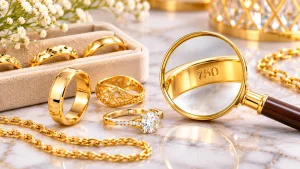
Understanding gold purity levels helps you figure out how much actual gold is in any piece of jewelry or bullion.
Silver
Silver is more abundant, more affordable, and more tied to industry. About 50% of silver demand comes from industrial applications like electronics, solar panels, and medical equipment, according to The Silver Institute.
That industrial connection makes silver’s price more volatile than gold. When the economy grows, silver demand rises. When it slows, silver can drop hard.
Silver also tarnishes over time when exposed to air. Gold doesn’t. That difference matters for both jewelry and long term storage.
Gold vs Silver at a Glance
| Factor | Gold | Silver |
| Price per oz (2026 range) | $4,800 to $5,600+ | $90 to $120+ |
| Mohs hardness | 2.5 | 2.5 to 3 |
| Purity standard (bullion) | 99.5% to 99.99% | 99.9% (fine silver) |
| Common jewelry purity | 10K to 24K | Sterling (92.5%) |
| Industrial use | Low (about 10%) | High (about 50%) |
| Price volatility | Lower | Higher |
| IRS tax classification | Collectible (28% max) | Collectible (28% max) |
Price and Affordability
Why Gold Costs More
Gold is expensive because it’s scarce. At over $5,000 per troy ounce in 2026, even a small gold ring carries serious value. The World Gold Council tracks global gold demand and reports that central banks have been net buyers of gold every year since 2010. That kind of institutional demand keeps prices elevated.
Why Silver Is More Accessible
Silver is far cheaper per ounce, which makes it easier for first time buyers and smaller investors to get started. But cheaper doesn’t mean better value. You need a lot more silver to store the same amount of wealth as gold.
Storing $10,000 worth of gold takes up a small box. Storing $10,000 worth of silver takes up a shelf. That matters for storage costs and practicality.
The Gold to Silver Ratio
This ratio measures how many ounces of silver it takes to buy one ounce of gold. It has historically averaged around 60:1 to 80:1. When the ratio is high, silver is considered relatively cheap compared to gold. Some investors use this ratio to time their buying and selling decisions.
Purity and Jewelry Standards
Gold Purity
Gold jewelry comes in different karats. 24K is pure gold. 18K is 75% gold. 14K is 58.3%. 10K is 41.7%. The lower the karat, the more alloy metals are mixed in for strength and color.
Different shades of gold like yellow, white, and rose all come from different alloy combinations. Gold bullion is typically 99.5% to 99.99% pure.
Silver Purity
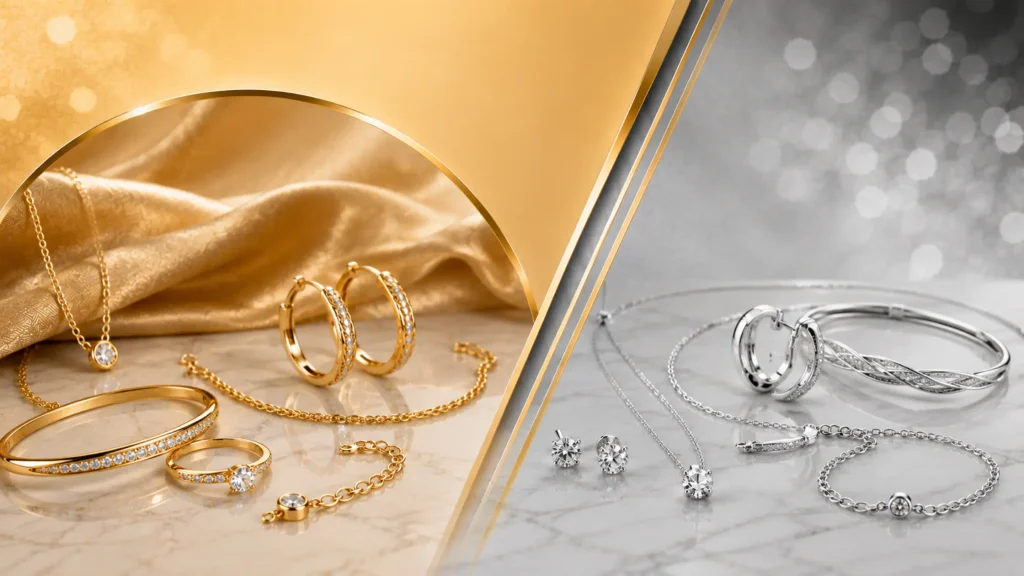
Silver jewelry is almost always sterling silver, which is 92.5% pure (stamped 925). Pure silver (99.9%) is too soft for jewelry, so copper is added for durability. Fine silver bullion bars and coins are 99.9% pure.
Labeling Requirements
The FTC requires accurate purity markings on both gold and silver jewelry sold in the United States. If a piece is stamped 14K or 925, it must meet those standards. You can read the full FTC Jewelry Guides for details on how precious metals must be labeled and advertised.
Investment Comparison
Gold as an Investment
Gold is the traditional safe haven. When markets crash, currencies weaken, or inflation rises, gold prices tend to go up. Central banks hold gold reserves specifically because gold retains purchasing power over long periods.
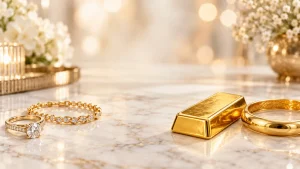
Gold bullion (bars and coins) is the most efficient way to invest. The premiums are small, resale is easy, and pricing is transparent through benchmarks like the LBMA Gold Price. If you’re thinking about buying, check out questions to ask before investing in gold.
Silver as an Investment
Silver is more volatile. It can swing 5% to 10% in a single week, which gold rarely does. That volatility creates opportunity but also risk.
Silver’s industrial demand gives it a different price driver than gold. That dual nature (part precious metal, part industrial commodity) makes silver harder to predict.
For a broader look at physical vs digital options, read about digital gold vs physical gold. The same logic applies to silver.
Resale Value: Which Sells Better?
Gold wins here, and it’s not close.
Selling Gold
Gold jewelry and bullion are easy to sell almost anywhere. Buyers test the karat, weigh the piece, and calculate the offer based on spot price. Expect 60% to 90% of melt value for jewelry and 85% to 97% for bullion.
Even broken or damaged gold sells without issues. Buyers melt it for the metal content. Brand, condition, and design matter less for scrap.
Selling Silver
Silver is harder to sell profitably. The metal value per gram is much lower, so even heavy silver pieces don’t bring much cash. A sterling silver bracelet weighing 30 grams might only be worth $30 to $50 in metal content.
Silver jewelry also carries higher retail markups relative to metal value. A silver necklace bought for $150 might contain $10 worth of silver. That gap is far worse than gold’s. If you have silver to sell, knowing what to expect when selling silver helps you set realistic expectations.
Jewelry: Gold or Silver?
This comes down to preference, skin tone, and budget.
Gold Jewelry
Gold offers more variety in color and karat options. It doesn’t tarnish, holds up better to daily wear, and retains more resale value. For engagement rings and pieces you’ll wear every day, gold is the better choice for longevity.
Silver Jewelry
Silver is affordable and has a clean, modern look. But it tarnishes over time and needs regular cleaning. It’s also softer and more prone to scratching than most gold alloys. Works well for fashion jewelry and budget friendly pieces.
Tax Treatment
The IRS treats both gold and silver as collectibles. If you sell either metal for more than your cost basis, capital gains are taxed at a maximum rate of 28%. This applies to bullion, coins, and jewelry.
Cash transactions above $10,000 may trigger reporting under the Bank Secrecy Act. This applies to both metals. Talk to a tax professional if you’re selling a large amount.
Which One Should You Choose?
If you want to store wealth long term, gold is the stronger choice. More stable, more liquid, and better at holding purchasing power across decades.
If you want an affordable entry point into precious metals, silver lets you start small. Just know that storage is bulkier and resale margins are thinner.
If you’re selling old jewelry, gold pieces will almost always bring more cash relative to what you paid. Silver’s scrap value is low compared to retail price. Avoid the common mistakes when selling gold and you’ll walk out with a fair deal.
If you’re diversifying, owning both makes sense. Many investors hold a mix to balance stability with growth potential.
Final Thoughts
Gold and silver are both real assets with real value. But they behave differently, sell differently, and serve different purposes. Gold is safer, more liquid, and higher value. Silver is cheaper to buy but harder to sell profitably and more volatile to hold.