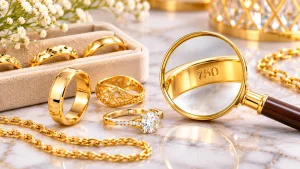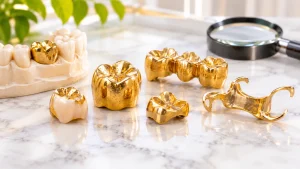


That old crown or bridge sitting in a ziplock bag in your bathroom drawer? It’s gold. Real gold. And depending on what your dentist used, it could be worth more than you’d expect.
Most people don’t think of dental work as something you can sell. It feels strange. But gold is gold, whether it’s shaped like a ring or molded to fit a molar.
Here’s how dental gold works, what it’s worth, and how to sell it in Rockford.
What Dental Gold Actually Is
Dental gold isn’t pure gold. Pure 24K gold is too soft to survive chewing, so dentists use gold alloys blended with other metals to make restorations stronger and more durable.
A typical dental gold alloy contains gold mixed with silver, platinum, palladium, copper, and sometimes zinc.
The exact blend depends on when the work was done, which lab made it, and what the dentist ordered.
The ANSI/ADA Specification No. 5 classifies dental casting alloys into three categories based on precious metal content.
| Alloy Classification | Precious Metal Content | Typical Gold Range |
| High Noble | 60% or more precious metals, with at least 40% gold | 16K to 22K |
| Noble | 25% or more precious metals | 10K to 16K |
| Base Metal | Less than 25% precious metals | Little to no gold |
High noble alloys are the ones worth real money. Noble alloys still have value but less per gram.
Base metal restorations (often nickel or chromium based) aren’t worth selling for scrap gold.
Types of Dental Gold You Can Sell
Pretty much any gold dental restoration is sellable. That includes:
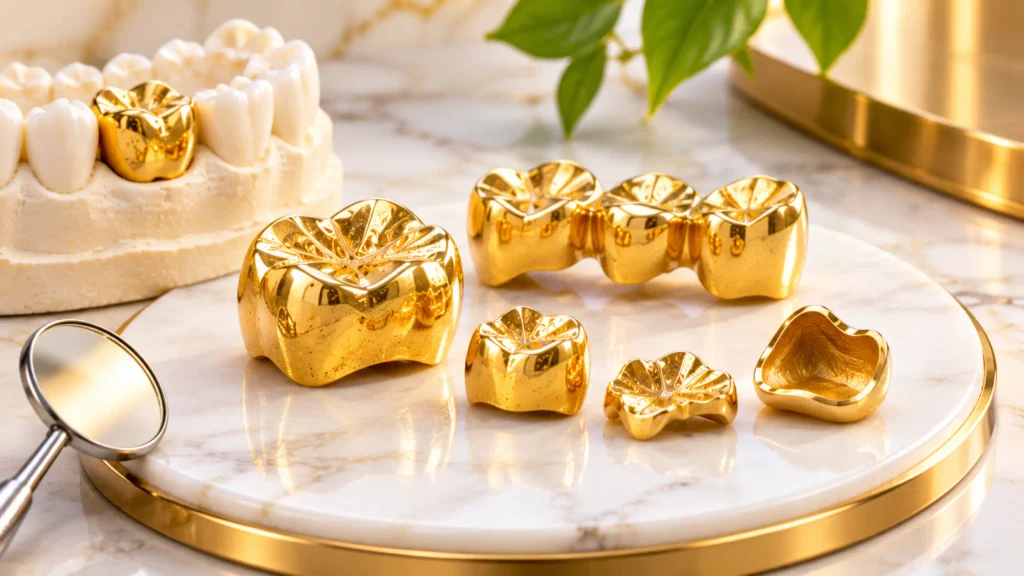
- Crowns (the most common, typically 2 to 5 grams each)
- Bridges (heavier, usually 6 to 15 grams because they span multiple teeth)
- Inlays and onlays (smaller fillings, lighter weight but still gold)
- Partial denture frameworks with gold clasps or connectors
- Old fillings removed during dental work
Even a single crown can be worth selling. One piece weighing 3 grams at 16K (about 67% gold) still holds meaningful value when gold prices are high. A bridge with two or three units? That adds up fast.
Why Older Dental Gold Is Usually Worth More
Here’s something most people don’t realize. Dental work done before the 1980s almost always used higher karat gold alloys than what’s common today.
Pre-1980s Dental Work
Dentists in the 1950s, 60s, and 70s routinely used 18K to 22K gold for crowns and bridges. High noble alloys were the standard. The gold content in a single crown from that era can be 75% or higher.
Modern Dental Work
Today’s dental labs shifted toward lower karat alloys and non-precious alternatives to cut costs. A crown placed in 2015 might only be 10K to 14K, or it might not contain gold at all.
What This Means for Your Payout
Gold purity directly determines what you get paid. A 20K crown from 1965 contains nearly twice the pure gold of a 10K crown from 2015. So if you inherited dental gold from a parent or grandparent, there’s a good chance it’s worth more than you’d guess.
How Dental Gold Gets Tested
This is where dental gold differs from regular jewelry. A standard acid test can determine gold purity, but dental alloys create a problem. The platinum and palladium mixed into the alloy can throw off acid test results.
Why Acid Tests Fall Short
Acid testing checks for gold, but dental alloys contain multiple precious metals. Palladium and platinum react differently than gold on an acid test. A buyer relying only on acid might undervalue your piece by missing those other metals entirely.
Why XRF Is Better for Dental Gold
XRF (X-ray fluorescence) analyzers read the exact composition of the alloy without damaging it. The scanner tells the buyer precisely how much gold, platinum, palladium, and silver are in your piece.
This matters more than most people realize. A dental alloy might be 50% gold but also contain 15% palladium and 10% platinum.
Both of those are valuable precious metals. A buyer with an XRF scanner pays for everything. A buyer with acid only pays for gold and misses the rest.
What to Ask Your Buyer
When choosing where to sell, ask how they test dental gold. If the answer is acid only, you could be leaving money behind. Read more about how gold buyers test jewelry so you know what to look for.
Do You Need to Clean It First?
No. And don’t try.
Dental gold often has porcelain, cement, or even tooth material still attached. That’s fine. Buyers expect it. They remove all non metal material before weighing and testing.
Trying to clean it yourself risks damaging the metal or losing small fragments.
Just put it in a bag and bring it in as is. Seriously. Nobody at a gold buying shop is going to be put off by a crown that still looks like it came out of someone’s mouth.
They’ve seen it all. The gold content is the same either way.
Selling Locally vs. Mailing to a Refinery
You have two main options for selling dental gold.
Local Gold Buyers
Walk in, get tested, get paid the same day. You can watch the testing process, ask questions, and negotiate. No shipping risks, no waiting. Selling locally avoids the headaches of mailing precious metals.
The key is finding a buyer who uses XRF testing, not just acid. And one who pays for all precious metals in the alloy, not just gold.
Mail In Refineries
Companies like Garfield Refining (established in 1892 and recognized by Dentaltown Magazine as a top refiner) specialize in dental scrap.
They melt and assay your pieces, which means they capture every precious metal present. Some offer slightly higher payouts than local buyers because they process material at scale.
The downside? You’re mailing gold. Even with insured shipping, there’s a trust factor involved. And payment takes days to weeks instead of minutes.
For most people in Rockford, a local buyer who pays competitively is the simpler and safer route.
Common Mistakes When Selling Dental Gold
Accepting a jewelry store rate
Some buyers treat dental gold the same as scrap jewelry and use acid testing only. Dental alloys deserve XRF testing that captures all precious metals.
Not checking the spot price first
Same rule as selling any gold. Know what gold is trading at before you walk in. It takes 30 seconds to check the LBMA gold price or the CME Group COMEX quote.
Selling to a traveling gold buyer
Pop up “gold buying events” at hotels or convention centers often pay 50% or less of melt value. They’re there for a weekend and gone. No accountability. No recourse if you got a bad deal.
Throwing away dental work
Dentists remove old crowns and bridges during procedures. If you don’t ask for them back, they go in the trash. Always tell your dentist you want to keep any gold restorations they remove.
That’s your gold, not theirs.
Bottom Line
Dental gold is real gold with real value. Whether it’s one crown or a handful of old bridges, it’s worth getting tested and priced. The piece doesn’t need to be clean, pretty, or even look like gold. It just needs to contain precious metals.
Check the spot price, find a buyer who uses XRF testing, and don’t settle for the first offer. Compare at least two quotes.
And if you’re in Rockford, SSAJ buys dental gold in any condition and tests every piece before making an offer.