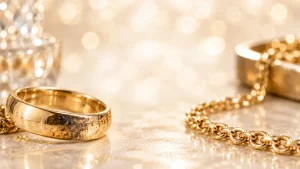


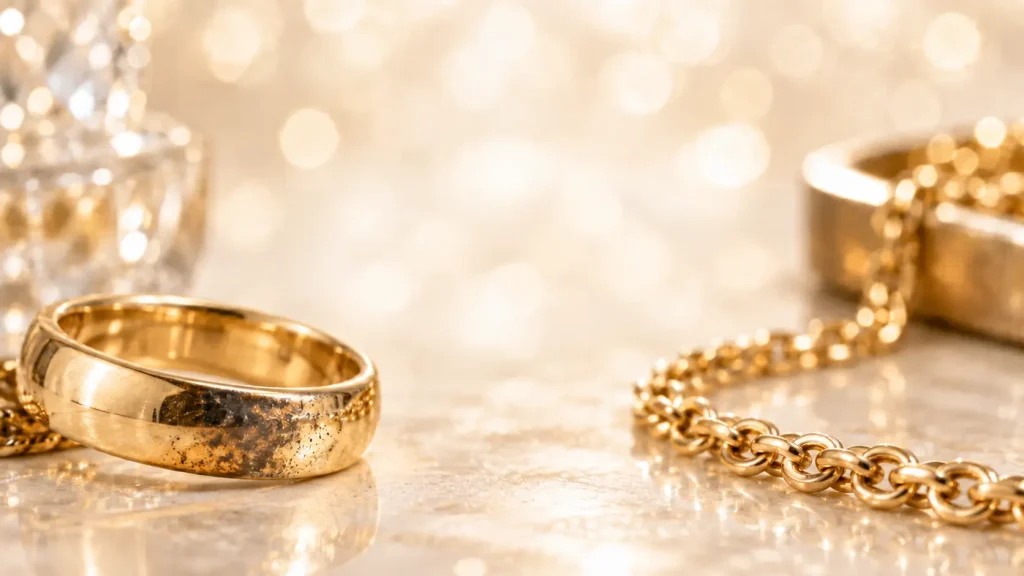
Your gold ring turned black. Your first thought is probably that it’s fake. But here’s the thing. Real gold can absolutely develop dark discoloration, and it doesn’t mean the piece is counterfeit or worthless.
The blackening happens for specific chemical reasons, and once you understand them, you can prevent it, fix it, and know when it’s actually a sign of a problem.
Yes, Real Gold Can Turn Black
Pure 24K gold doesn’t tarnish or discolor on its own. But almost no jewelry is pure gold. Most pieces are 10K, 14K, or 18K, which means 25% to 59% of the metal is something other than gold. Those alloy metals are what react and cause discoloration.
The lower the karat, the more alloy metals are present, and the more likely the piece is to darken over time. Understanding gold purity levels helps you see why a 10K ring is far more prone to blackening than an 18K one.
This is also one of the reasons gold jewelry looks different after years of wear. It’s chemistry, not a defect.
What Causes Gold to Turn Black
Your Body Chemistry
This is the most common cause. Your sweat contains salts, acids, and compounds that react with copper and silver alloysin gold jewelry. What speeds it up:
- Naturally acidic skin chemistry (varies person to person)
- Medications like antibiotics, hormonal treatments, and iron supplements
- Excessive sweating during exercise or hot weather
The American Academy of Dermatology notes that skin reactions to jewelry metals are common and vary based on individual body chemistry.
Cosmetics and Beauty Products
Lotions, perfumes, sunscreen, and makeup contain compounds that react with gold alloys. The usual culprits:
- Zinc oxide and titanium dioxide in sunscreens and foundations
- Sulfur compounds in certain skincare products
- Alcohol based perfumes applied directly onto jewelry
The reaction creates a fine black powder on the metal surface. That dark smudge on your skin under a ring or bracelet isn’t the gold wearing away. It’s chemical residue forming on the surface.
Sulfur Exposure
Sulfur reacts with copper and silver in your jewelry to form dark sulfide compounds on the surface. Common sulfur sources:
- Hot springs and mineral baths
- Handling eggs, garlic, and onions while wearing gold
- Rubber bands and rubber gloves (rubber contains sulfur)
- Air pollution in industrial areas
- Natural gas in the home
If you’ve ever worn a gold ring while cooking eggs and noticed it darken, sulfur is the reason.
Chlorine
Chlorine doesn’t just discolor gold. It attacks the alloy metals at a molecular level. Sources include:
- Swimming pools and hot tubs
- Household bleach and cleaning products
- Tap water in some areas
Repeated exposure weakens the metal structure, makes the piece brittle, and can cause cracking near solder points. This goes beyond cosmetics. Always remove gold jewelry before swimming or cleaning with chlorine products.
Environmental and Storage Conditions
Gold can darken even when you’re not wearing it. Storage matters more than most people think. Common triggers:
- High humidity in the storage area
- Direct contact with rubber, felt, or treated leather in jewelry boxes
- Air pollution in industrial or urban areas
- Storing multiple pieces touching each other
Pieces left unworn in a drawer for years often come out darker than when they went in. That’s not the gold going bad. It’s the alloy metals reacting with whatever they’re stored near.
Does Karat Level Matter?
Absolutely. The higher the karat, the less alloy metal is present, and the less likely blackening occurs.
| Karat | Gold Content | Alloy Content | Blackening Risk |
| 24K | 99.9% | 0.1% | Almost zero |
| 18K | 75% | 25% | Low |
| 14K | 58.3% | 41.7% | Moderate |
| 10K | 41.7% | 58.3% | Higher |
A 10K ring has more alloy than gold in it. That much copper and silver creates a lot of surface area for chemical reactions. An 18K ring has far less alloy and is noticeably more resistant to discoloration.
The different shades of gold also play a role. Rose gold contains more copper than yellow or white gold at the same karat. More copper means more reactivity and a higher chance of darkening.
How to Clean Blackened Gold
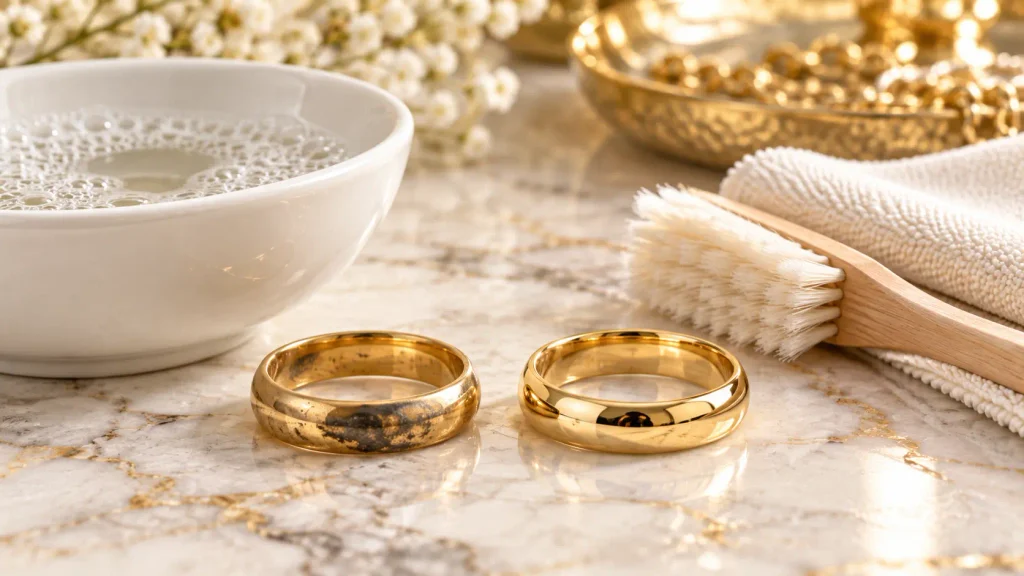
Most surface discoloration is removable at home.
Warm Water and Mild Soap
Mix a few drops of dish soap in warm water. Soak the piece for 15 to 20 minutes. Gently scrub with a soft bristle toothbrush. Rinse under clean water and pat dry with a soft cloth.
Baking Soda Paste
For stubborn dark spots, mix baking soda with a few drops of water to form a paste. Apply it to the blackened area with a soft cloth. Rub gently in small circles. Rinse and dry. Don’t use this method on pieces with gemstones or delicate settings as the abrasion can loosen stones.
Professional Polishing
If home cleaning doesn’t work, a jeweler can polish the piece using professional equipment. They’ll remove the oxidized surface layer and restore the shine. This is quick and usually inexpensive.
Cleaning your jewelry before selling is part of good preparation. A clean piece makes a better impression, even though the buyer is paying for gold content, not appearance.
When Blackening Is a Bad Sign
Sometimes dark discoloration does point to a problem.
It Might Be Plated
If the blackening reveals a completely different colored metal underneath, the piece is likely gold plated, not solid gold. Plated jewelry has a thin gold layer over brass, copper, or steel. When that layer wears through, the base metal shows and often oxidizes into dark or greenish marks.
Check for stamps like GP (gold plated) or GF (gold filled). If you see those, the piece contains very little actual gold. Knowing how to spot fake gold helps you tell the difference between tarnished solid gold and worn out plating.
Structural Damage From Chlorine
If the piece feels brittle, has tiny cracks near solder points, or breaks easily after turning black, chlorine damage may be the cause. This kind of damage is not just cosmetic. The metal integrity is compromised and can’t be restored by cleaning alone.
Does Blackening Affect Resale Value?
Not for scrap. Buyers who purchase gold for its metal content don’t care about surface discoloration. They’re testing the karat and weighing the piece, not judging how it looks. A blackened 14K ring and a polished 14K ring of the same weight get the same melt value offer.
Even heavily tarnished or damaged gold holds full scrap value. The gold inside doesn’t lose purity because the surface turned dark.
For pieces with resale potential beyond melt (designer, vintage), cleaning before selling might help you get a better offer. But for standard scrap gold, don’t worry about it.
How to Prevent Gold From Turning Black
A few simple habits go a long way:
- Remove jewelry before swimming, cleaning, or showering
- Apply lotions, perfume, and sunscreen before putting jewelry on
- Store pieces individually in soft cloth pouches, not touching each other
- Keep gold away from rubber bands, rubber gloves, and treated leather
- Clean pieces every few weeks with warm soapy water
- Avoid wearing gold while handling sulfur rich foods
Final Thoughts
Real gold can turn black, and it doesn’t mean your jewelry is fake. It means the alloy metals inside are reacting to your body, your environment, or the chemicals around you. Lower karat gold is more prone to it. Higher karat gold resists it better.
Clean it, prevent it, and don’t let a little discoloration stop you from selling. The gold inside is worth the same either way.