

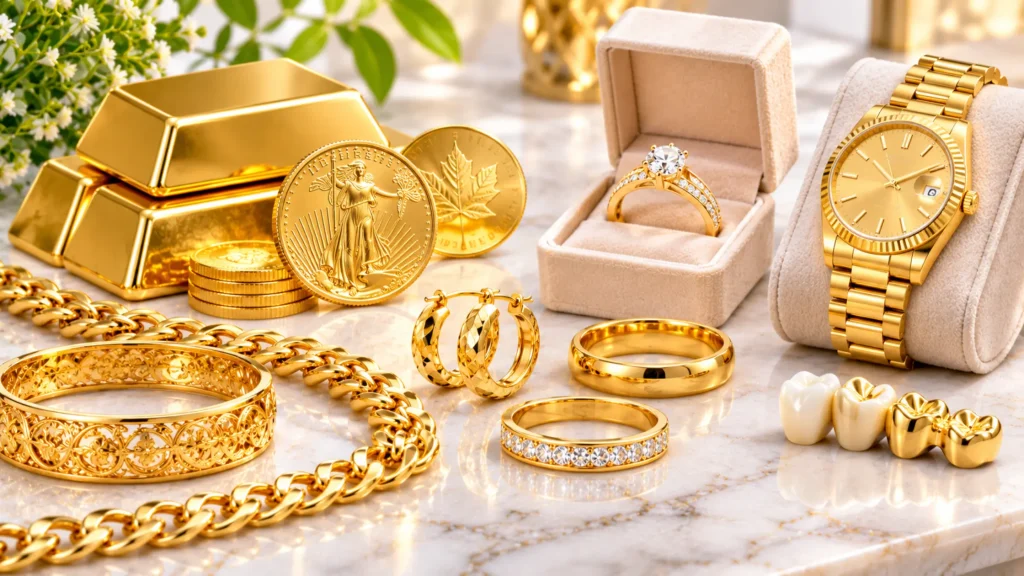
Gold doesn’t corrode, can’t be manufactured, and every culture on earth recognizes it as valuable. That’s why it holds its worth when almost everything else loses it.
But a gold bar and a gold bracelet can weigh the same and pay out very differently. The difference comes down to purity, form, and demand. Here’s how different gold items stack up when you actually go to sell.
What Drives a Gold Item’s Value
Three things determine what a gold item is worth at resale:
- Purity. A 24K piece is 99.9% gold. A 10K piece is only 41.7%. Higher purity means more gold per gram and a bigger payout.
- Weight. Heavier pieces contain more total gold. A thick 14K chain can outvalue a thin 18K one simply because it weighs more.
- Form and demand. Bullion trades closest to spot price. Jewelry carries making charges that you lose at resale. Rare coins can exceed their gold content by thousands.
The FTC Jewelry Guides set the legal standards for how gold purity is labeled and marketed in the United States. Those standards are what make the karat system reliable for both buyers and sellers.
That’s the formula. Everything below is how it plays out across different gold items.
Gold Bars and Bullion
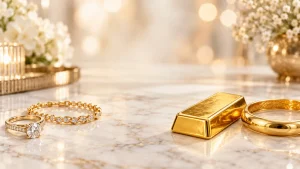
Bullion sits at the top of the resale value chain. No craftsmanship premium, no brand markup, no gemstones to subtract. Just pure gold priced by weight.
Why Bullion Pays the Most Per Gram
Gold bars from recognized mints like the Royal Canadian Mint, Perth Mint, or PAMP Suisse carry a small premium over spot price when you buy them. These mints independently verify purity and stamp each bar with a serial number, which is why buyers trust them and pay more than they would for a generic bar. When you sell, bullion gets you the closest to spot price compared to any other gold form.
What Affects Bullion Resale
- Bars with assay certificates and original packaging sell faster
- Recognized mint brands command slightly higher offers than generic bars
- Standard sizes (1 oz, 10 oz) are easier to resell than odd weights
The World Gold Council sets the industry benchmarks for bullion purity and responsible sourcing. Bars meeting these standards trade with the least friction worldwide.
If you’re holding investment grade bullion, you’re holding the most liquid form of gold there is.
Gold Coins
Gold coins sit in a unique spot. They carry melt value based on gold content, but some carry collector premiums that push the price well beyond the metal.
Government Issued Coins
Popular coins like the American Gold Eagle (22K), Canadian Maple Leaf (24K), and South African Krugerrand (22K) trade at modest premiums above spot. They’re recognized worldwide, easy to authenticate, and highly liquid. Most gold buyers will make an offer on the spot.
Rare and Vintage Coins
This is where gold content becomes secondary. A $20 Saint-Gaudens Double Eagle from 1907 contains less than one ounce of gold. But in high grade condition, it can sell for tens of thousands based on rarity and collector demand alone. That numismatic premium has nothing to do with the gold price.
The catch? You need a coin dealer or auction house to capture that premium. A standard gold buyer will typically offer melt value only for coins unless they specialize in numismatics.
Fine Gold Jewelry (18K and Above)
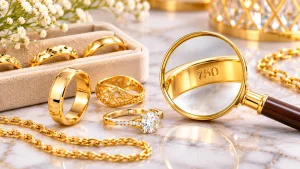
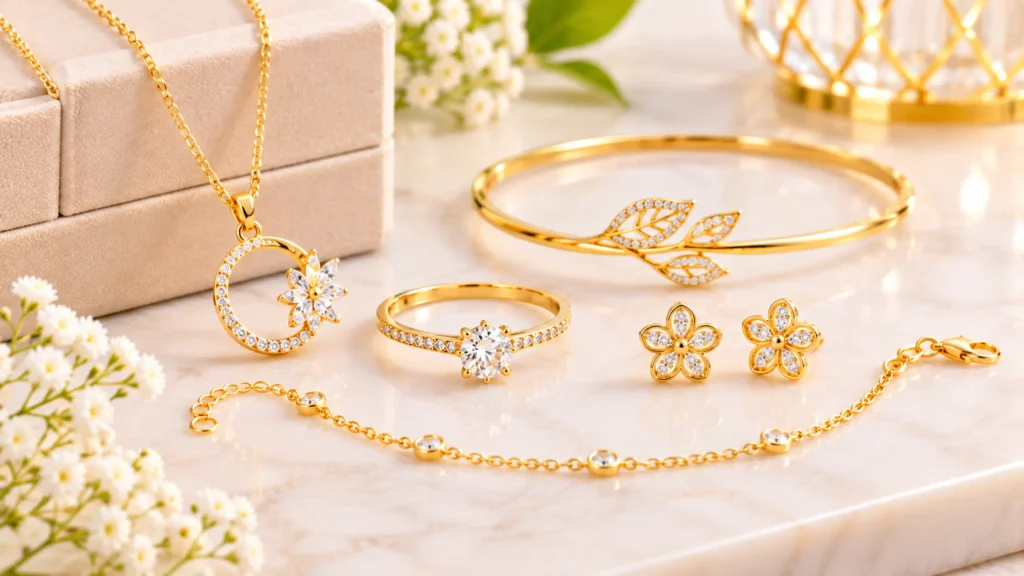
Fine jewelry in 18K or 22K holds significant gold content. An 18K piece is 75% pure gold. A 22K piece jumps to 91.6%. Both carry real weight at resale.
The Making Charge Problem
Here’s what most people don’t realize. When you bought that 18K necklace, you paid for the gold plus a making charge covering design, labor, and retail markup.
That making charge can add anywhere from 15% to over 30% on top of the raw gold value, depending on the piece and the retailer.
When you sell, you get paid on gold content only. The making charge disappears entirely. A necklace you paid $2,000 for might contain $1,200 in gold at today’s prices. That’s not a rip off. That’s how jewelry depreciation works.
When Jewelry Beats Melt Value
Designer pieces from houses like Cartier, Tiffany, or Van Cleef sometimes sell above melt value because the brand carries its own resale market. Vintage and estate jewelry with historical significance can do the same. But for most pieces, melt value is the realistic baseline.
Everyday Gold Jewelry (14K and 10K)
Most gold jewelry in American households is 14K or 10K. Wedding bands, class rings, chains, earrings, old bracelets in a drawer.
Why Everyday Jewelry Still Has Value
- 14K contains 58.3% gold. A 10 gram 14K ring holds 5.83 grams of pure gold.
- 10K contains 41.7% gold. Less per gram, but still real gold with real value.
- Condition doesn’t matter much. Scratched, bent, broken, missing stones. It all gets melted down for the gold content.
Weight Is Your Friend
Don’t judge a piece by how it looks. A beat up 14K rope chain weighing 30 grams holds more gold value than a pristine 18K pendant weighing 3 grams. When selling scrap, weight wins.
What about gold plated or gold filled? Neither carries meaningful resale value. Gold plated items have a microscopic gold layer measured in microns. Gold filled is thicker but still only 5% gold by weight.
If the stamp says GP, GF, GEP, HGE, or RGP, it’s not worth selling for gold content. Here’s how to tell the difference between solid gold and plated.
Gold Watches
Gold watches are tricky. The value depends entirely on what’s inside the case and what’s on the dial.
Luxury Brand Watches
A Rolex Day Date in 18K yellow gold holds its value and often appreciates because of brand demand. Patek Philippe, Audemars Piguet, and Omega gold models behave similarly. For these, a watch dealer will usually pay more than a gold buyer because they’re paying for the watch, not just the metal.
Fashion and Plated Watches
A generic gold plated fashion watch is worth close to nothing. The gold on a plated watch case is measured in microns, not grams. If the case back doesn’t say 10K, 14K, or 18K, it’s almost certainly plated.
For solid gold watches without a recognized brand name, a gold buyer evaluates it like any other piece of gold jewelry. You get paid on gold weight and purity, not the watch itself.
Gold Items People Overlook
Some of the most commonly overlooked gold items are worth more than people expect.
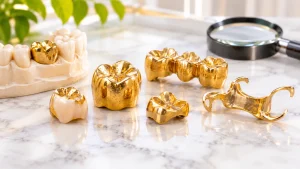
- Dental gold. Old crowns and bridges contain high karat gold alloys, sometimes 16K to 22K. A single bridge can hold $100 to $400 in gold.
- Single earrings. Lost the match? The gold is still worth selling. One 14K gold earring still has value on its own.
- Gold clasps and findings. The clasp on a pearl necklace, the bail on a pendant, the backs of earrings. Small pieces add up when you gather them together.
- Gold religious medals and charms. Crucifixes, saints medals, Star of David pendants. Many are solid 14K or 18K and heavier than they look.
- Gold pen clips and accents. High end pens from brands like Parker or Montblanc sometimes use solid gold clips or bands. Worth checking before tossing an old pen.
Check the LBMA gold price before bringing anything in. Thirty seconds of research gives you a baseline to judge any offer against.
Bottom Line
Bullion pays the most per gram. Coins trade close behind, with rare dates potentially worth multiples of their gold content. Fine jewelry gives you melt value minus the making charge. And everyday 14K and 10K pieces are worth more than most people sitting on them realize.
Gather what you have, check the spot price, and get it tested. Gold buyers in Rockford, including SSAJ on East State Street, test every piece and pay based on exact weight and purity.