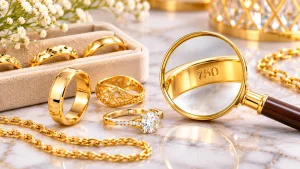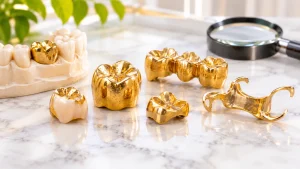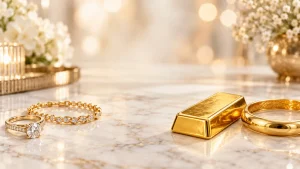


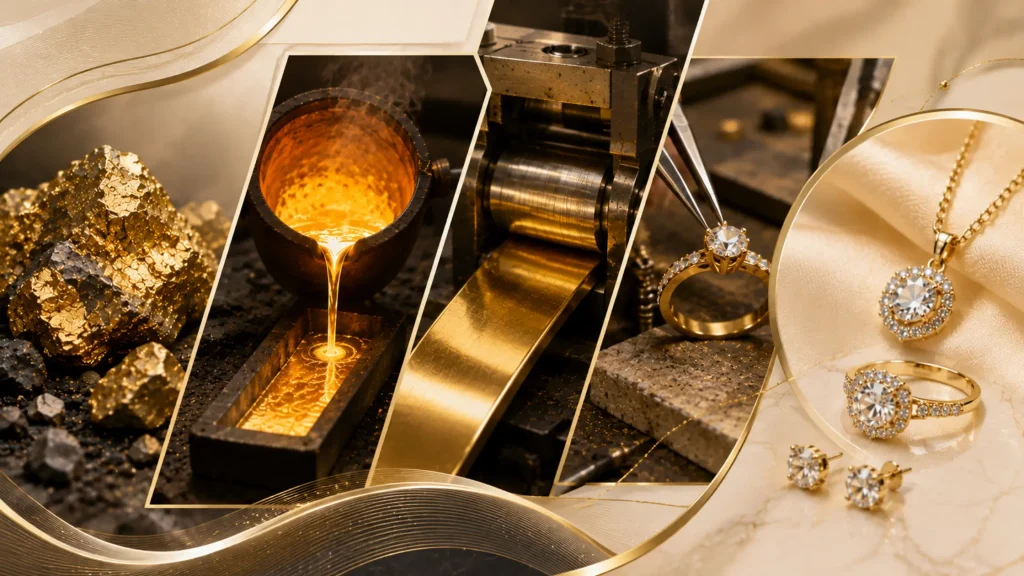
That gold ring on your finger started as rock buried deep underground. It went through mining, refining, alloying, shaping, and finishing before it ever touched a display case. Each step affects the purity, quality, and value of the final piece.
Here’s the full journey.
Step 1: Mining the Raw Gold
Gold doesn’t come out of the earth looking like a ring. It comes out as ore, a mix of rock, dirt, and tiny amounts of gold.
How Much Gold Is in the Ground?
Not much per ton. Most gold ore contains just 5 to 10 grams of gold per ton of material. That’s roughly one teaspoon of gold from a truckload of rock.
How It’s Extracted
Large scale mines use two main methods:
- Open pit mining strips away surface layers to reach gold deposits near the top.
- Underground mining follows gold veins deep below the surface through shafts and tunnels.
The United States Geological Survey (USGS) tracks global gold production. The top producing countries include China, Australia, Russia, Canada, and the United States.
Mining supply directly affects price. Disruptions in major regions can push gold prices up fast.
Step 2: Refining the Ore Into Pure Gold
Raw gold ore isn’t pure. It contains silver, copper, iron, and other minerals. Refining strips all of that away.
The Two Main Refining Methods
- Miller process: Uses chlorine gas to separate impurities. Produces gold that’s 99.5% pure.
- Wohlwill process: Uses electrolysis. Pushes purity to 99.99% (four nines fine).
The Global Standard
Refined gold bars that meet the London Bullion Market Association (LBMA) Good Delivery standard must be at least 99.5% pure. Accredited refineries include PAMP Suisse, Valcambi, Metalor, and the Royal Canadian Mint.
At this stage, the gold is pure but formless. It gets cast into bars or granules and sold to manufacturers, mints, or jewelers. This is where the split happens between investment grade bullion and jewelry grade gold.
Step 3: Alloying (Mixing Metals for Strength and Color)
Pure 24K gold is too soft for everyday wear. A ring made of pure gold would bend, scratch, and dent within weeks. So jewelers mix gold with other metals to make it harder.
How Karats Are Created
The alloy recipe determines the karat:
| Karat | Gold Content | Common Alloy Metals |
| 24K | 99.9% | None (pure gold) |
| 22K | 91.7% | Silver, copper, zinc |
| 18K | 75.0% | Silver, copper, palladium |
| 14K | 58.3% | Silver, copper, zinc, nickel |
| 10K | 41.7% | Silver, copper, zinc, nickel |
Lower karat gold is harder and more durable, but contains less actual gold. That’s why gold purity levels matter so much when buying or selling.
How Gold Gets Its Color
The alloy metals also control the shade:
- Yellow gold: Silver and copper mix. The classic warm tone.
- White gold: Palladium or nickel added. Often coated with rhodium for brightness.
- Rose gold: Higher copper ratio. Creates the pinkish tone.
Same karat, same gold content, different look. Read more about different shades of gold to see how this works.
Step 4: Shaping the Metal Into Jewelry
Once the alloy is ready, it becomes an actual piece of jewelry through one of three methods.
Casting
The most common method. Molten gold alloy is poured into a mold shaped like the final piece. Once cooled, the rough casting is removed and cleaned. Works best for rings, pendants, and detailed designs.
Stamping and Die Cutting
For simpler pieces like flat bangles or basic bands. Gold sheets or wire are cut and pressed into shape using machines. Faster and cheaper than casting but limits design complexity.
Handcrafting
High end and custom pieces are shaped by hand. A jeweler bends, hammers, solders, and files the gold into form. Takes more skill and time, which is why handcrafted pieces carry higher labor costs.
This craftsmanship premium is a big part of why jewelry depreciates so steeply at resale. Buyers pay for the gold, not the hours spent shaping it.
Step 5: Finishing and Stone Setting
After shaping, the piece goes through its final stages.
Polishing
The raw piece comes out rough. Multiple rounds of polishing with progressively finer abrasives create the mirror finish you see in stores. This step transforms a dull casting into something that catches light.
Stone Setting
If the design includes diamonds or gemstones, a setter carefully places each stone and secures it with prongs, bezels, or channels. A poorly set stone can come loose over time.
Pieces with missing stones still hold gold value. Gold jewelry with missing parts gets priced on its metal content regardless of what fell out.
Step 6: Hallmarking and Quality Stamps
Before reaching a store, each piece should be stamped with its karat value. In the United States, the FTC’s Jewelry Guides require that any piece marked with a karat value must meet that standard.
What the Stamps Mean
- Karat stamp (10K, 14K, 18K, 24K): Tells you the gold purity.
- Maker’s mark: Identifies the manufacturer.
- GP or GF: Means gold plated or gold filled. Very little actual gold.
Reading these stamps is one of the most useful skills when buying or selling. It’s also how you spot fake gold that claims to be something it’s not.
Step 7: The Retail Markup
By the time a gold ring sits in a display case, its price includes:
- Mining and refining costs
- Alloy materials
- Manufacturing labor
- Design and craftsmanship fees
- Stone costs (if applicable)
- Branding and marketing
- Store overhead and profit margin
That final price can be 200% to 300% above the actual gold value inside the piece. A ring with $400 worth of gold might sell for $1,200 at retail.
This markup is the single biggest reason scrap gold brings less than people expect. Buyers pay for the gold content. Not the brand. Not the design. Not the price tag.
Why This Journey Matters When You Sell
Every step from mine to store adds cost. But when you sell, buyers strip all of that away and focus on one thing: how much gold is inside.
That’s why a $2,000 ring doesn’t sell for $2,000 secondhand. The buyer pays for the grams of gold at whatever karat is stamped, priced against today’s spot market.
Some valuable gold items do fetch more than melt value. Luxury brands and exceptional craftsmanship can attract buyers who see resale potential beyond the metal. But for most everyday jewelry, the gold content is what pays.
Final Thoughts
Gold goes through a long journey before it becomes jewelry. Each step adds a cost that doesn’t come back at resale. The gold itself holds value. Everything layered on top is a premium you pay once and lose when you sell.