

Not all gold is the same. That number stamped inside your ring or printed on a bullion bar tells you exactly how much pure gold is in the piece. And it changes everything about the value, durability, and color of what you’re holding.
Here’s a straightforward breakdown of every common karat level, what the numbers actually mean, and why it matters whether you’re buying or selling gold.
What Karat Is Pure Gold?
Pure gold is 24 karats, meaning all 24 out of 24 parts are gold with no other metals mixed in. The karat system works on a scale of 24. A 14K ring has 14 parts gold and 10 parts alloy. The more gold parts, the higher the purity.
Under the FTC Jewelry Guides, nothing below 10K can legally be marketed as gold jewelry in the United States. So 10K is the floor for anything sold as “real gold” in this country.
Gold Purity by Karat: The Complete Breakdown
| Karat | Gold Content | Fineness Stamp | What It’s Used For |
| 24K | 99.9% | 999 | Investment bars, coins, bullion |
| 22K | 91.6% | 916 | High end jewelry, some coins |
| 18K | 75.0% | 750 | Fine jewelry, engagement rings |
| 14K | 58.3% | 585 | Everyday jewelry, wedding bands |
| 10K | 41.7% | 417 | Budget friendly jewelry |
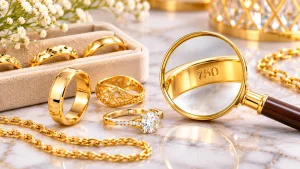
Those three digit fineness numbers (417, 585, 750, 916, 999) tell you the same thing as karats but in parts per thousand.
You’ll see them stamped on European, Middle Eastern, and Asian gold especially.
A chain stamped 750 is 18K gold. A ring marked 585 is 14K. Same gold, different labeling system.
24K Gold: Maximum Purity
24K is 99.9% pure gold. It has the deepest, richest yellow color of any karat because there are no alloy metals diluting it.
Why 24K Isn’t Used in Jewelry
Pure gold is extremely soft. It bends, dents, and scratches with normal handling. That’s why 24K is almost never used in jewelry you’d wear daily.
Where 24K Belongs
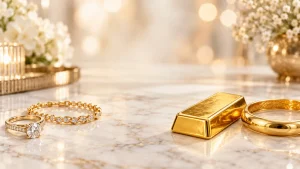
It belongs in investment grade bullion, gold bars, and collector coins where durability doesn’t matter because nobody’s wearing them. If you’re buying gold purely to hold value, 24K tracks the spot price most closely.
22K Gold: The Cultural Standard
22K gold runs 91.6% pure. It’s the traditional choice across South Asia, the Middle East, and parts of East Africa for wedding jewelry and ceremonial pieces.
Why 22K Is Rare in American Stores
You won’t find much 22K jewelry in U.S. retail shops. It’s still too soft for everyday rings or bracelets that take a beating. Most American jewelers skip it entirely and jump from 18K to 24K bullion.
Inherited 22K Gold
If you’ve inherited gold from Indian, Pakistani, or Middle Eastern family members, there’s a strong chance it’s 22K. And that higher gold content translates directly into more value when you sell.
18K Gold: The Fine Jewelry Sweet Spot
At 75% pure gold, 18K hits the balance most jewelers consider ideal for quality pieces. It has a warm, rich color that’s noticeably more golden than 14K.
What Gets Made in 18K
- Engagement rings and wedding sets from luxury brands
- High end watches and designer pieces
- Fine rings, necklaces, and bracelets meant for regular wear
If the item carries a premium brand name, it’s probably 18K.
How 18K Creates Different Gold Colors
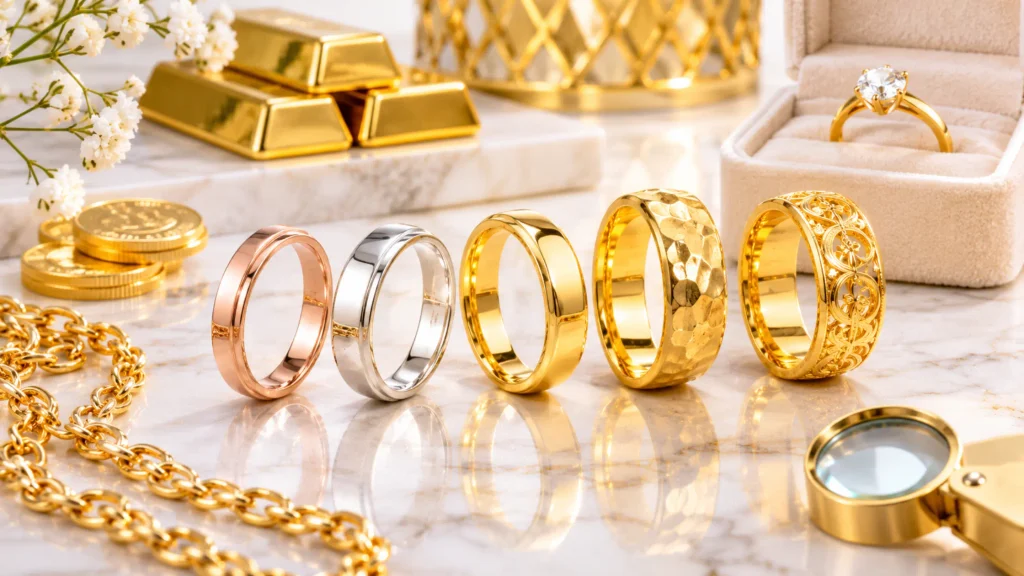
The alloy mix determines color. Copper heavy alloys create rose gold. Nickel or palladium alloys produce white gold. Same karat, completely different shades.
14K Gold: The American Standard
14K is the most popular karat in the United States. At 58.3% gold content, it’s hard enough for daily wear, affordable enough for most budgets, and still contains enough gold to hold real resale value.
What You’ll Find in 14K
- Wedding bands and class rings
- Everyday chains, earrings, and bracelets
- Most jewelry sold in American retail stores
It resists scratches better than 18K and costs significantly less per gram.
Why 14K Is the Workhorse Karat
For people who plan to wear their jewelry hard and replace it eventually, 14K makes the most practical sense. It balances gold content with durability better than any other karat on the market.
10K Gold: The Legal Minimum
10K gold contains 41.7% gold and 58.3% other metals. It’s the most durable karat because the alloy content is so high, but it also has the palest color and the least gold per gram.
Budget jewelry, fashion pieces, and items designed for rough daily use often land at 10K. It’s still real gold. It still has value.
But per gram, it’s worth considerably less than higher karats when you go to sell.
Which Karat Is Best? It Depends on What You Need
There’s no single “best” karat. It depends entirely on purpose.
- Buying for investment? Go 24K. Bars and coins in pure gold track the spot price most closely and are easiest to resell.
- Buying fine jewelry? 18K gives you the richest look with enough durability for regular wear.
- Buying everyday jewelry? 14K balances cost, durability, and gold content better than anything else.
- On a tight budget? 10K gets you real gold at the lowest price point.
And if you’re selling? The karat determines your payout. A gold buyer calculates your offer based on weight times purity times the current spot price. So a 10 gram piece of 18K gold contains 7.5 grams of pure gold, while 10 grams of 10K contains only 4.17 grams. Same weight on the scale, very different checks.
How Karat Gets Verified
You can’t tell gold purity just by looking at it. Color varies depending on the alloy metals used, and a polished 10K piece can look similar to 18K under certain lighting.
Acid Testing
This involves scratching the gold on a touchstone and applying acid solutions to determine the karat range. It works but it’s approximate. Different acids react at different karat thresholds, so the result is a range rather than an exact number.
XRF Analysis
XRF (X-ray fluorescence) reads the exact composition without damaging the piece. It’s faster, more precise, and tells the buyer exactly what metals are present. That’s why serious gold buyers invest in XRF equipment.
Industry Standards
The World Gold Council sets the guidelines for gold purity measurement and responsible sourcing. Their standards influence how refiners and assay offices worldwide verify gold content.
If you’re curious whether a piece is real before visiting a buyer, check for a karat stamp first. Spotting fake gold at home is possible, but professional testing gives the definitive answer.
What This Means When You Sell
Here’s the practical part most guides skip. Gold purity directly affects what you walk out with.
- Buyers pay on pure gold weight, not total weight. A 5 gram 14K bracelet contains about 2.9 grams of actual gold. That 2.9 grams is what gets priced.
- Higher karat pieces are worth more per gram. An 18K piece contains nearly twice the gold of a 10K piece at the same weight.
- But weight can outweigh purity. A heavy 10K chain can easily outvalue a light 18K pendant because total gold content is weight times purity.
- Check the spot price before you walk in. The LBMA gold price takes 30 seconds to look up and gives you a baseline to evaluate any offer.
Bottom Line
24K is pure gold. Everything below it is gold mixed with other metals in precise ratios. The karat number tells you that ratio, and the ratio sets the price.
Whether you’re shopping for a ring or cleaning out a jewelry box, the karat stamp is the first thing to check. It tells you exactly what you’re dealing with before anything else matters.