


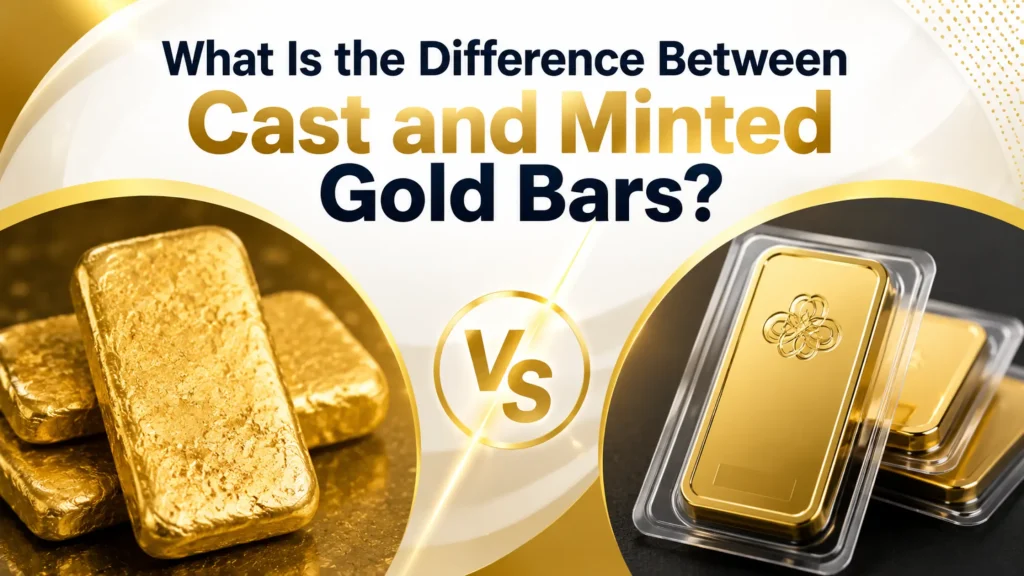
Not all gold bars are made the same way. Walk into any bullion dealer and you’ll notice some bars look rough and unpolished while others are sleek with mirror finishes. That’s because gold bars are produced using two different methods: casting and minting. Both contain real gold, but the process, appearance, cost, and resale experience differ.
How Cast Gold Bars Are Made
Cast bars are the simpler of the two. The process starts with melting gold to its liquid state and pouring it into a mold. Once the gold cools and hardens, the bar is removed, stamped with its weight and purity, and that’s about it.
Some refiners smooth the surface slightly, but cast bars are generally left with a rough, uneven texture. Each bar looks a little different because the cooling process creates unique surface patterns. No two cast bars are identical.
Cast bars have been around for centuries. It’s the oldest method of producing gold bars, and LBMA accredited refiners like Metalor, Umicore, and Asahi still use it today. Understanding how gold prices are determined helps you see that both cast and minted bars are priced off the same spot market regardless of how they’re made.
How Minted Gold Bars Are Made
Minted bars require more steps. The process starts with a cast gold blank that gets rolled into a flat strip of uniform thickness. Individual bars are then cut from the strip and stamped with a die that imprints the refiner’s logo, weight, purity, and sometimes a serial number.
The result is a bar with crisp edges, a smooth finish, and a polished look. Many minted bars come sealed in tamper evident assay cards that include a certificate of authenticity from the refiner.
This process takes more time, more labor, and more precision. Refiners like PAMP Suisse, Valcambi, and the Perth Mint are known for their minted bars. Brand recognition matters in bullion, and minted bars from these names carry strong resale demand.
Visual and Physical Differences
The easiest way to tell them apart is by looking at them.
| Feature | Cast Bars | Minted Bars |
| Surface finish | Rough, uneven, sometimes rippled | Smooth, polished, uniform |
| Edges | Rounded or irregular | Sharp, clean cut |
| Appearance | Rustic, industrial | Refined, sleek |
| Packaging | Often sold loose | Usually sealed in assay card |
| Uniqueness | Each bar looks slightly different | Identical across production runs |
Neither appearance affects the gold content. A 1 oz cast bar and a 1 oz minted bar contain the exact same amount of gold at the same purity. The difference is purely cosmetic and process related.
Price Difference
Minted bars cost more than cast bars. Not because they contain more gold, but because the manufacturing process is more expensive. The extra machining, polishing, die stamping, and packaging all add to the production premium.
For a 1 oz bar, the difference might be $20 to $50 depending on the refiner. For smaller bars (1g, 5g, 10g), the premium gap can be proportionally larger because the production cost is a bigger percentage of the total price.
Cast bars offer more gold for your money if you’re buying purely for metal content. Minted bars make sense if you value presentation and easier resale. Knowing what affects bullion resale value helps you weigh that tradeoff.

Which One Is Easier to Sell?
Both sell without issues at any reputable gold buyer. But there are some differences in the resale experience.
Minted Bars
Minted bars in sealed assay packaging are the fastest to sell. The buyer can verify weight and purity from the card without opening or testing the bar. Serial numbers can be cross referenced with the refiner’s database. Less testing means less hassle, which often translates to a slightly better offer.
Cast Bars
Cast bars sell just fine, but the process takes a bit longer. Without sealed packaging, the buyer will need to independently verify purity and weight using XRF testing or acid tests. That extra step doesn’t kill the deal, but it does add time.
Large cast bars (100 oz, 400 oz) are actually the standard format for institutional trading. The LBMA’s Good Delivery specification for large gold bars is a cast format, not minted. So at the institutional level, cast bars are the norm.
For individual sellers, preparing before your visit by bringing any receipts or assay cards you have speeds up the process for either type.
Which One Should You Buy?
Depends on your goal.
If you’re buying purely for gold content and want the most metal per dollar, cast bars are the smarter choice. You pay a lower premium and get the same amount of gold.
If you want easier resale and presentation, minted bars win. The sealed packaging, serial numbers, and polished finish make future transactions faster. They’re also better for gifting or passing down.
If you’re buying larger sizes (10 oz and above), cast becomes more common and the premium gap narrows. At those sizes, most investors don’t care about aesthetics.
For first time buyers, reading about investment grade gold bullion and the questions to ask before investing in gold will help you decide what fits.
Common Misconceptions
“Cast bars are lower quality.” Wrong. Cast bars from accredited refiners meet the same purity standards as minted bars. The LBMA doesn’t differentiate quality based on production method. A 99.99% cast bar is chemically identical to a 99.99% minted bar.
“Minted bars are always worth more.” Not exactly. The premium you pay when buying doesn’t fully carry over to resale. Buyers pay based on gold content first. You might recoup some of the minting premium, but not all of it.
“Cast bars are harder to authenticate.” They require testing, yes. But any buyer with proper equipment can verify a cast bar in minutes. It’s not a dealbreaker. Read about why some bullion is harder to sell to understand what actually slows down a sale versus what doesn’t.
Final Thoughts
Cast and minted are two ways to make the same product. The gold inside is identical. Cast gives you more metal per dollar. Minted gives you convenience and presentation. Pick the one that matches how you plan to hold and eventually sell your gold.